
Last updated October 15, 2026
 Sweep & inspection
 Caps & crowns
 Flue relining
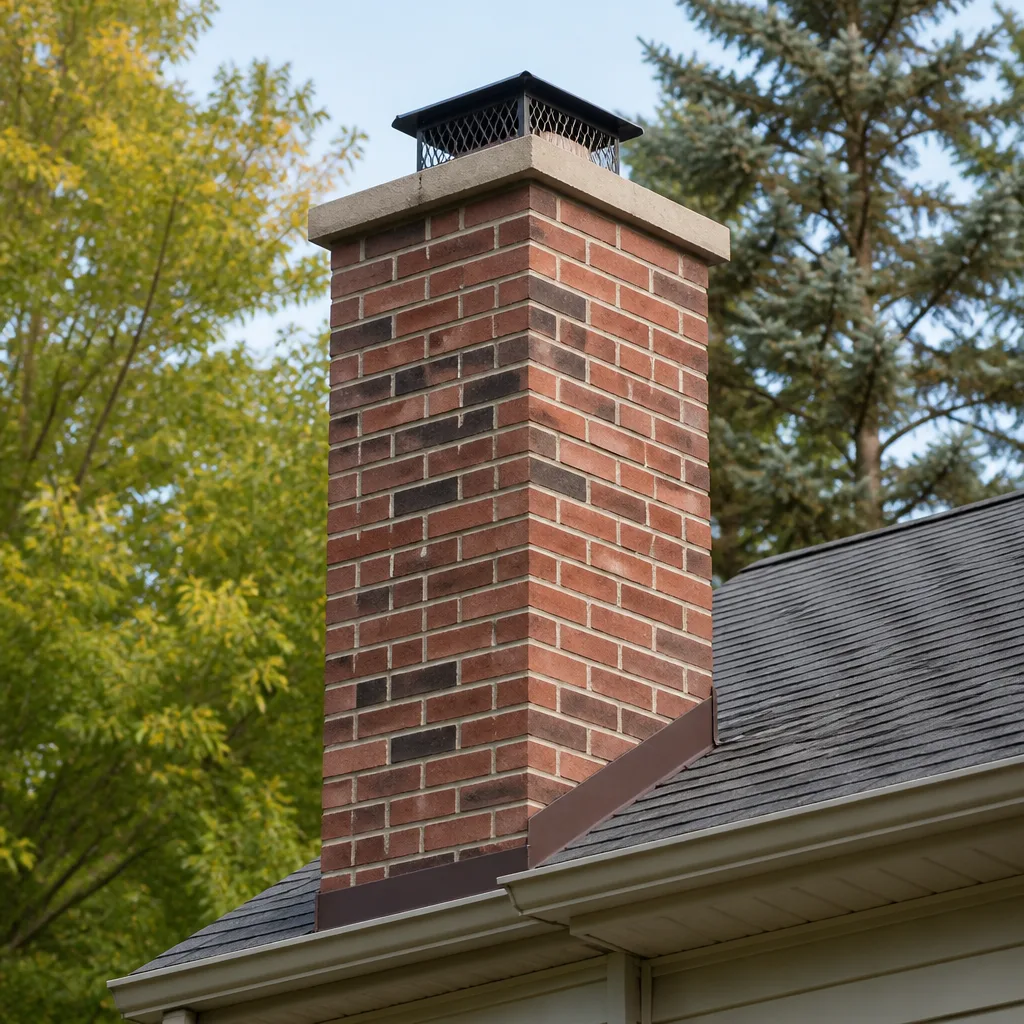 Masonry repair
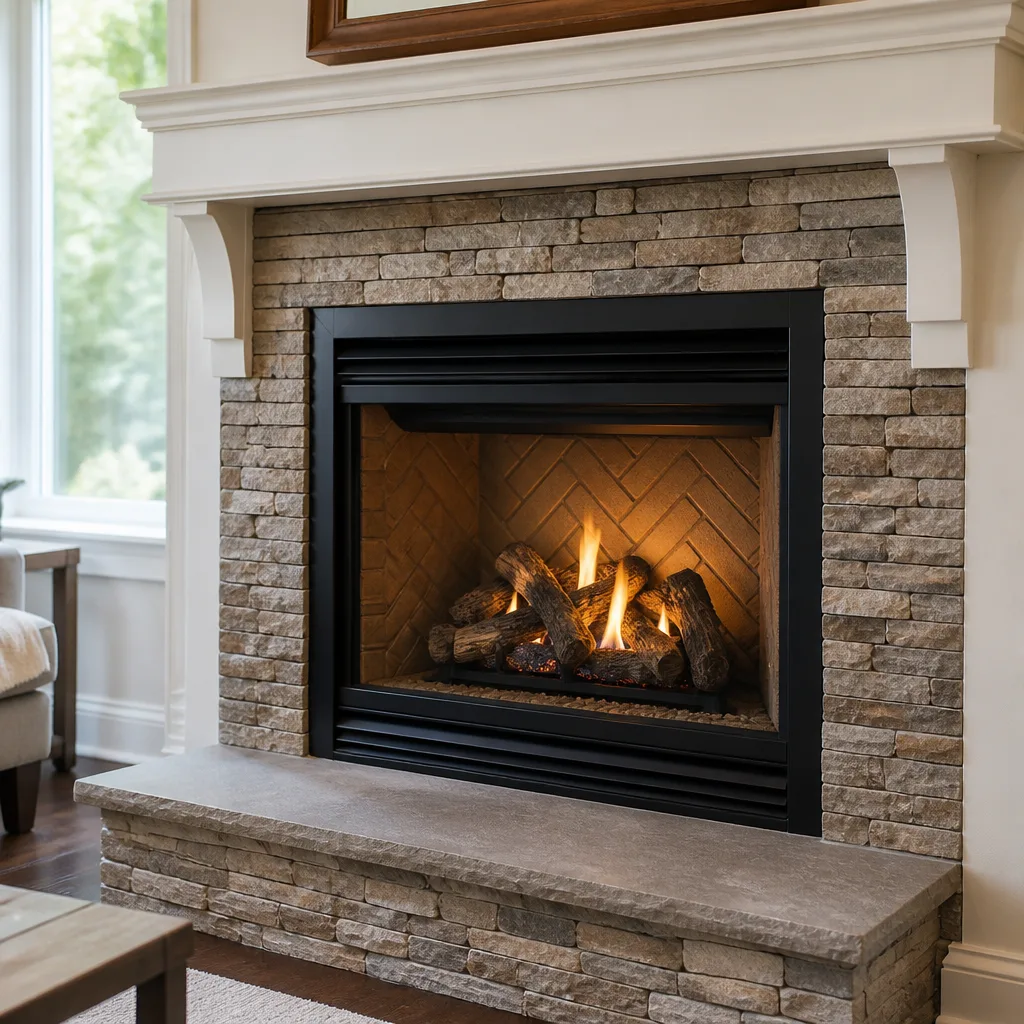 Gas fireplace service
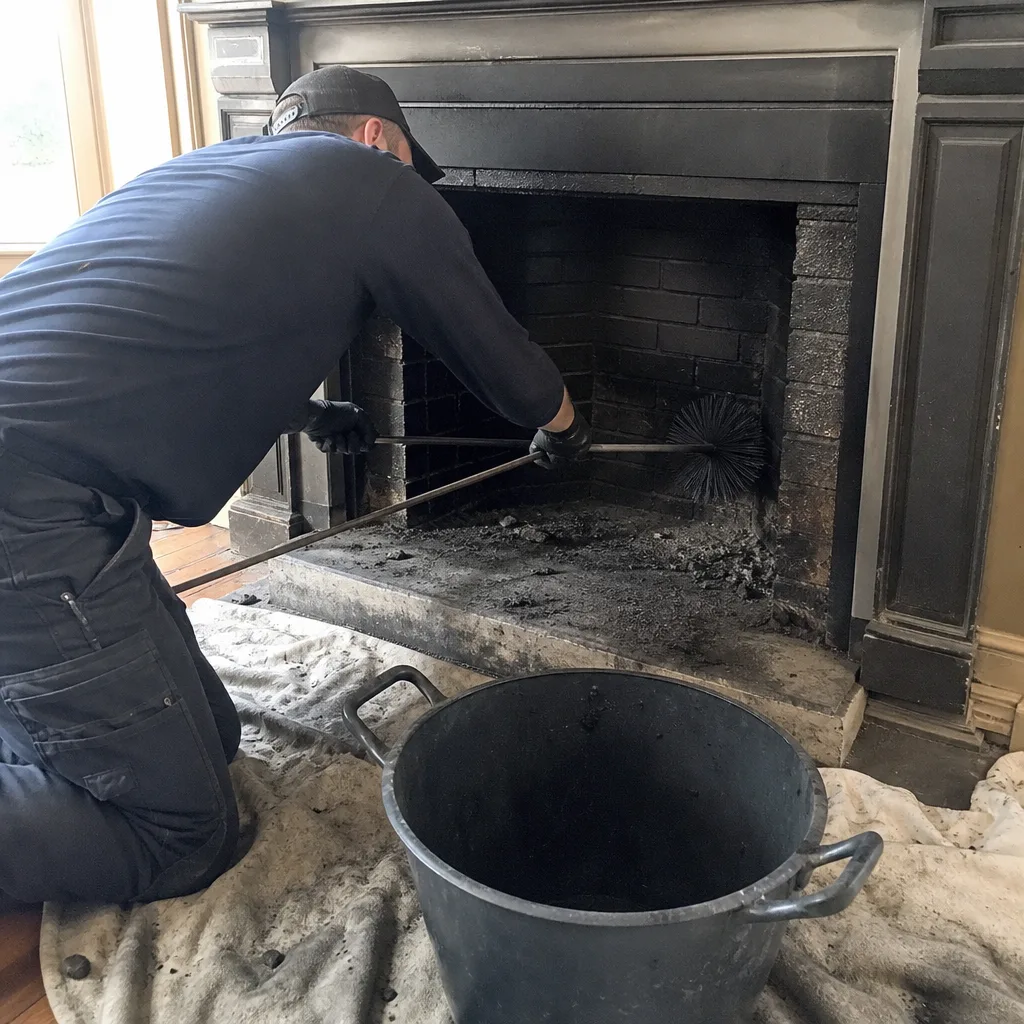
Level 1 sweep and inspection to the NFPA 211 annual standard - flue, crown, cap, and flashing checked and photographed
Chimney sweep logs do not sweep chimneys. They loosen some creosote - which then falls where a brush and vacuum still have to collect it.
Chimney Cleaning Permits, Codes & Inspections in NY: What You Need to Know
A Queens homeowner we spoke with last year nearly lost the sale of her Forest Hills co-op over a chimney repair done three years earlier. The flue relining had been performed by an unlicensed contractor. During the buyer’s title search, an open Department of Buildings (DOB) violation surfaced, the deal stalled for six weeks, and the original contractor had vanished. The work itself was probably fine. The paperwork wasn’t. That’s the thing about chimney work in New York City: the physical labor is only half the job, and the documentation is what bites you later. This guide explains exactly where the permit line sits, how to check your own address for violations, what the FDNY requires, and how to verify a contractor before they ever touch your chimney. We’re a Queens company, and we’ve watched neighbors navigate this system for over two decades. Here’s what actually matters and what you can safely ignore.
Styles & brands we work with
Quick Answer
Routine chimney sweeping and a standard visual inspection do not require a permit anywhere in New York State, including Queens, though our Chimney Sweep Maintenance Checklist for Queens Homeowners can help you track what’s needed. But the moment work crosses from cleaning into repair, relining, rebuilding, or replacing a chimney cap or crown, New York City Department of Buildings permits typically apply, and the contractor must hold a valid NYC Home Improvement Contractor (HIC) license. If you own in a co-op or condo, your board may impose additional approval layers. Check your address in the DOB’s Buildings Information System before hiring anyone, always, and verify the HIC license number against the city’s online database.
Table of Contents
- Maintenance vs. Alteration: The Legal Line Most Homeowners Miss
- What NYC DOB Permits Actually Apply to Chimney Work
- How to Check Your Queens Address for Open Chimney Violations Before Hiring Anyone
- FDNY Requirements for Wood-Burning Fireplaces in Queens Residential Buildings
- Co-op and Condo Board Rules: The Second Approval Layer Most Guides Skip
- The NYC Home Improvement Contractor License: What It Is and Why It’s Non-Negotiable
- Common Mistakes to Avoid
- When to Call a Professional
- Frequently Asked Questions
- The Bottom Line
Maintenance vs. Alteration: The Legal Line Most Homeowners Miss
Here’s the distinction in plain English. Maintenance keeps what already exists working the way it was originally designed. Alteration changes, replaces, or rebuilds the structure. In New York City, the DOB draws this line through the building code, and chimney work straddles it constantly. A sweep that removes creosote, the tar-like buildup that causes chimney fires, is maintenance. A camera inspection to look at the flue liner is maintenance. No permit, no filing, ever.
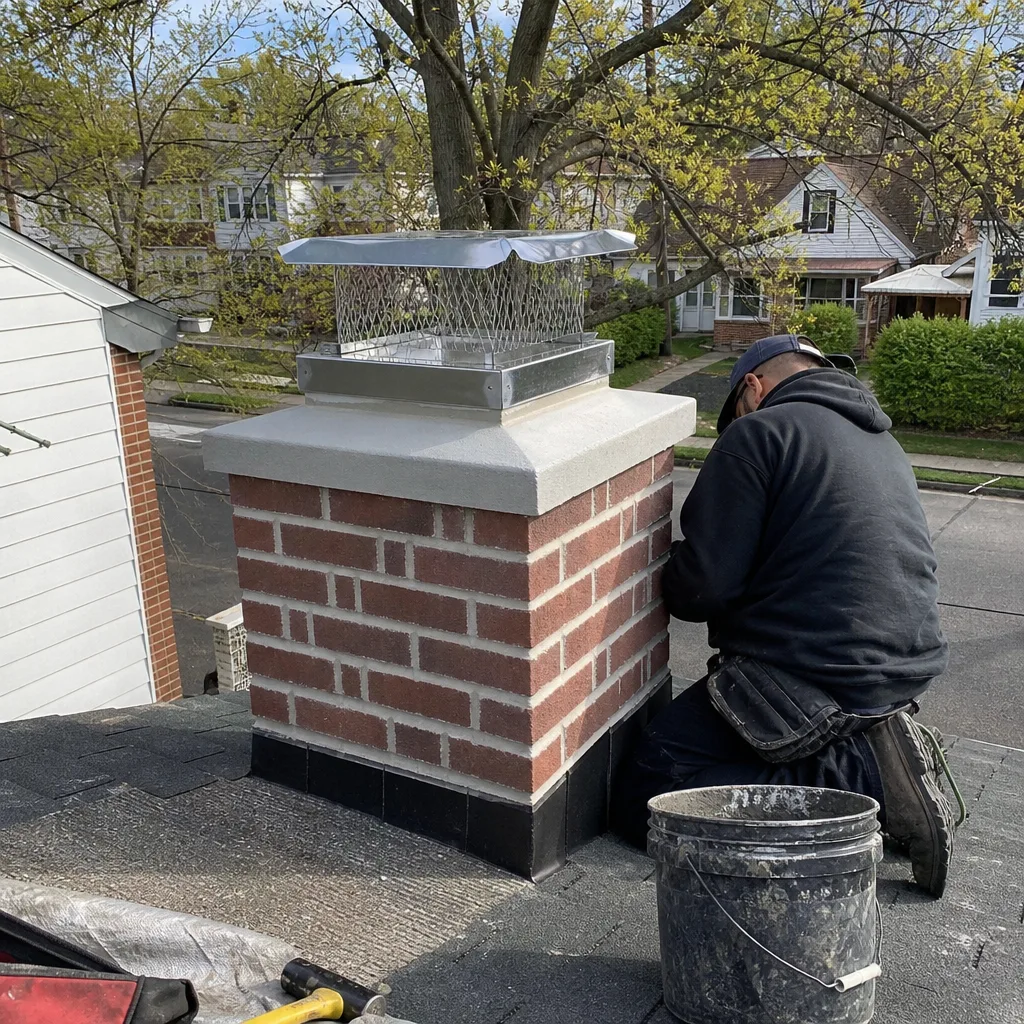
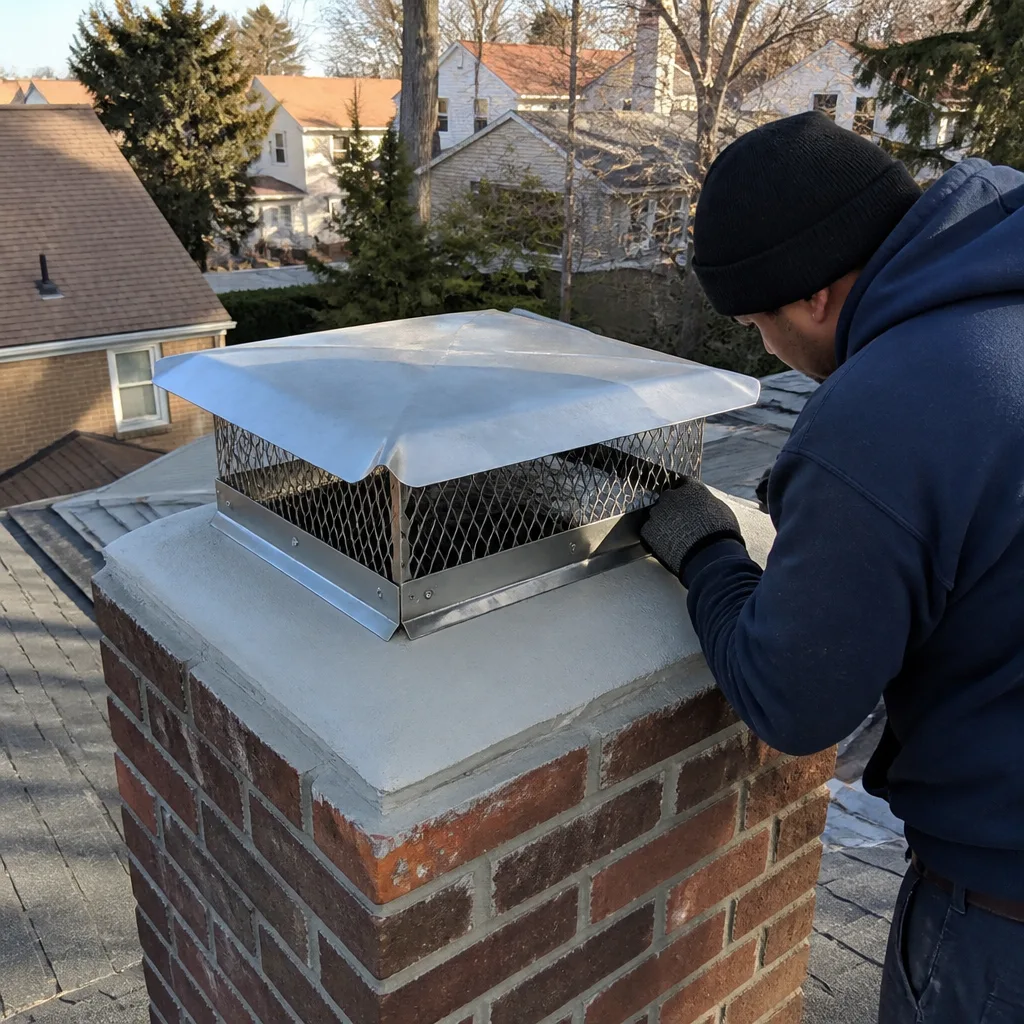
But replacing that flue liner with a new one? That’s an alteration. Repointing significant sections of masonry above the roofline? Alteration. Rebuilding a chimney crown after water damage has cracked it? Alteration. Installing a new stainless steel chimney cap that’s being mechanically fastened in place? In most cases, alteration, or at minimum, work that requires a Chimney Inspection in Queens to document the before and after condition for future resale.
Why does this line matter so much? Because alteration work without a permit creates what the DOB calls a work-without-permit violation. It doesn’t matter if the contractor did a beautiful job. It doesn’t matter if the flue drafts perfectly and the new liner will last thirty years. The violation is a legal record attached to the property’s address, and it stays there until someone files to resolve it, sometimes years later. In Queens, we regularly see these surface during co-op sales in Jackson Heights and Forest Hills, where purchasers use attorneys who run full DOB searches as standard practice. A single-family homeowner in Bellerose who plans to stay another twenty years might never get caught. But if you sell, refinance, or file an insurance claim related to the chimney, that open violation becomes your problem, not the original contractor’s.
What NYC DOB Permits Actually Apply to Chimney Work
New York City uses a permit system organized by work type. Chimney projects typically fall into one of three categories, depending on scope. Here’s what you need to know before writing a check to any contractor.
- No permit required: Chimney sweeping, flue brushing, creosote removal, smoke test, Level 1 visual inspection, minor joint sealing and caulking, replacing a rusted chimney cap that matches the existing footprint without structural changes. These are maintenance items, full stop. We do these in Queens every day without any filing whatsoever.
- Permit may be required (verified on a case-by-case basis): Installing a stainless steel liner system like DuraFlex inside an existing flue. The DOB’s position has shifted over time. In some cases, a reline is considered an alteration because it changes the flue’s performance characteristics. We recommend getting a written opinion from a licensed contractor before assuming it’s exempt. The safe approach is to call the DOB’s Queens office directly or ask your contractor to pull a permit if there’s any ambiguity. A contractor who dismisses the question without checking is a red flag.
- Permit definitely required: Rebuilding any portion of the masonry chimney structure, installing a new flue where one didn’t exist, changing the flue diameter, converting a fireplace fuel source, rebuilding a chimney crown with formwork, or any structural repair above the roofline that involves demolition. These are filed as alterations with construction plans, and sometimes a structural engineer’s sign-off.
Here’s a detail most Queens homeowners don’t expect: New York City treats attached and semi-attached rowhouses differently than fully detached single-family homes when it comes to fire-rated assemblies. In neighborhoods like Middle Village and Glendale, where attached brick homes share party walls, chimney work that touches the shared wall may trigger additional fire-stopping requirements. A contractor who works primarily in suburban Long Island won’t know this. A Queens contractor will, because we deal with attached housing stock daily.
Cost is the other thing worth addressing honestly. A permit filing for a typical liner replacement or crown rebuild in Queens adds anywhere from $400 to $1,500 to the project, depending on whether drawings are required and how the DOB responds. That’s not a scam fee. It’s the cost of the city reviewing the work and maintaining the record. We’ve had customers ask us to skip the permit to save money, and our answer is always the same: we won’t, and we’ll explain exactly why. The $600 you save on a permit could cost you $6,000 and a delayed closing three years later.
How to Check Your Queens Address for Open Chimney Violations Before Hiring Anyone
This is the single most useful thing in this guide, and it takes fifteen minutes. The NYC DOB maintains a public database called the Buildings Information System, typically referred to as BIS. It’s accessible online, it’s free, and it contains every permit, violation, and complaint attached to your property’s address, going back decades. Here’s how to use it, step by step.
- Find your BBL. Go to the DOB’s website and search for your address. The system will show you your Borough, Block, and Lot number, or BBL. This ten-digit number is the key that unlocks all city records for your property. Write it down.
- Run a violation search. Enter the BBL into the BIS violation lookup. The system will show every open and resolved violation. Look specifically for codes related to chimney work, plumbing, gas, and fire. An open violation for “work without a permit” is what you’re hunting for. Even if it was filed years ago by a previous owner, you need to know about it.
- Run the complaint history. Next, check the complaints section for anything filed by a neighbor, an inspector, or a fire marshal related to smoke, odor, or chimney condition. A complaint is not a violation. But a pattern of complaints tells you that someone flagged the chimney before, which means a previous inspection may have generated findings.
- Pull any existing permits. If work was done legitimately, the permit will be in the system. You should see the filing date, the work type, and whether the job was signed off. A permit that was pulled but never signed off is also an open record that can complicate a sale, even though the work itself may be pristine.
- If you find something, don’t panic. Open violations can be resolved. It requires filing the right paperwork, sometimes paying a penalty, and often having the work inspected. A licensed contractor with NYC experience can guide you through this. The worst thing you can do is ignore it and hope it goes away during a sale, because it won’t.
We’ve had homeowners in Astoria find violations from the 1990s that they had no idea existed, left behind by long-dead contractors and previous owners. None of these were their fault. But in the city’s system, the violation belongs to the property, not the person. You inherit it when you buy. Checking before you spend money on new work ensures you’re starting from a clean slate. It’s the first thing we do when a homeowner mentions selling within five years.
FDNY Requirements for Wood-Burning Fireplaces in Queens Residential Buildings
Most chimney guides talk about DOB permits and stop there. But in New York City, the Fire Department has its own layer of rules that apply specifically to solid-fuel burning appliances, which means wood-burning fireplaces. And in Queens, these rules matter more than in Manhattan because we have far more single-family and two-family homes with working fireplaces, in neighborhoods like Kew Gardens, Whitestone, and Bayside.
The FDNY’s authority comes from the New York City Fire Code. Here are the rules that actually affect a typical Queens homeowner with a wood-burning fireplace.
- Chimney inspection frequency. The Fire Code requires that chimneys serving solid-fuel appliances be inspected and cleaned as often as necessary to prevent creosote accumulation, but no less than once a year if the fireplace is used regularly. This isn’t a suggestion. If a chimney fire occurs and the homeowner cannot show evidence of maintenance, the insurance claim gets complicated fast.
- Chimney fire reporting. If your chimney catches fire, and a neighbor calls 911, the FDNY will respond. They consider any chimney fire a structural fire event. The fire marshal will often document it, and the address may receive a violation if the chimney shows evidence of excessive creosote buildup or neglect. The way to avoid this entirely is annual sweeping. A standard sweep in Queens runs $180 to $300 before any repairs.
- Solid fuel restrictions. The city has regulations about what you can burn. Dry, seasoned hardwood only. No construction debris, no treated lumber, no garbage, no gift wrap. Burning anything other than clean firewood creates corrosive byproducts that damage the flue and accelerate creosote accumulation. We see this in Queens every winter: well-meaning homeowners burning scrap wood or shipping pallets because they’re free, not realizing they’re setting the stage for a chimney fire.
- Fireplace use during air quality advisories. New York State occasionally issues burn restrictions on days with poor air quality, though the city has largely moved away from banning residential fireplace use outright. Still, being a reasonable neighbor matters. If the air quality index is high, holding off on the fire is the right call, and it’s a good moment to check whether your flue is due for inspection.
The FDNY does not issue permits for chimney cleaning. Their role is enforcement and fire prevention, not work authorization. But their rules create the practical urgency for why annual cleaning exists as a standard in the first place. A chimney that hasn’t been swept in five years isn’t just dirty. In the eyes of the fire code, it’s a hazard. And in Queens, where older homes often have original masonry flues from the 1920s and 1930s, that hazard is compounded by decades of thermal cycling, freeze-thaw damage, and occasional deferred maintenance. If you want to read more about what a proper inspection uncovers, our Chimney Inspection in Queens page covers the three levels of inspection in detail.
Co-op and Condo Board Rules: The Second Approval Layer Most Guides Skip
Now the part almost every national guide gets wrong. They write about city permits and state codes and pretend that’s the whole story. In Queens, where a large percentage of housing stock is co-op and condo, your building’s own governing documents can be more restrictive than the city. Condo boards in Long Island City and co-op boards in Forest Hills and Rego Park routinely require approval for any work that touches the building envelope, and chimneys are part of the building envelope.
Here’s the practical reality. The city may not require a permit for a chimney sweep. But your co-op board can absolutely require that you notify them before any contractor enters the building, and some boards require a certificate of insurance naming the co-op as an additional insured. That’s not a code requirement. That’s a building-specific rule. And if you skip it, you’re not violating the law, but you’re violating your proprietary lease or your house rules, and the board can pursue action against you.
What do you actually need from your board? Here’s a practical checklist.
- Written approval in an email or letter for any chimney work beyond routine cleaning. We’ve watched boards reject contractors outright because the contractor wasn’t on the building’s approved vendor list, even for a simple sweep.
- Certificate of insurance. Ask your contractor to provide a COI with the co-op or condo corporation listed as an additional insured. Most buildings require at least $1 million in general liability coverage. This is a standard document, and any professional chimney company can produce it same day.
- Access rules. Some buildings have specific hours for contractor work, or require that a super or porter be present during roof access. Confirm this before booking so your technician doesn’t arrive and get turned away at the door.
- The alteration agreement. For anything structural, like a liner replacement or crown rebuild, the board may require you to sign an alteration agreement and post a security deposit. This is standard in co-ops and increasingly common in condos. It protects the building, and while it’s paperwork, it’s not a refusal. It’s how the board verifies that work is being done by a licensed, insured contractor.
We’ve spent more than twenty years working in Queens buildings with these exact layers. The homeowners who get frustrated are often the ones who didn’t check their building rules before booking. The ones who sail through are the ones who asked the board first, got the requirements in writing, and sent those requirements to us before we ever scheduled the truck. We’re glad to provide any documentation your board needs. Just tell us what they require, and we’ll prepare it. That’s our Alcott Chimney Queens home approach: verify everything before we arrive, so there are no surprises on either side.
The NYC Home Improvement Contractor License: What It Is and Why It’s Non-Negotiable
New York City issues a specific license called the Home Improvement Contractor license, universally referred to as the HIC license. It’s administered by the Department of Consumer and Worker Protection, not the DOB. And here’s the blunt truth: if a contractor performing chimney repairs in Queens does not hold an HIC license, you have almost no recourse when something goes wrong. The city can’t help you. You can sue, but collecting is a different matter. A contractor without an HIC license is operating outside the law the moment they perform any home improvement work exceeding $200 in value.
Chimney cleaning itself is a gray area, and some sweep companies operate without the license because they argue cleaning is not home improvement. The DOB and DCWP have generally accepted that interpretation for basic sweeping. But the moment the project includes a new flue liner, a rebuilt crown, a new cap, repointing, or any repair work, the HIC license requirement triggers. There is no ambiguity worth gambling on. Any company doing more than sweeping should hold the license, full stop.
Verifying the license takes two minutes. Go to the DCWP’s online license lookup tool, enter the company name or license number, and check that the license is active. Look for the following.
- License number matches the company exactly. Not a similar name, not a previous name. Exact match.
- Address matches reality. The license records a business address. If the license lists a PO box in another borough, that’s not necessarily a problem, but it’s worth asking why.
- No active complaints or disciplinary actions in the DCWP system. A history of complaints doesn’t always mean bad work, but it’s worth knowing. Pattern of complaints over multiple years is a signal.
- The license is current. HIC licenses expire and must be renewed. An expired license is no license at all.
Beyond the license, we recommend homeowners verify identity, not just paperwork. We’re part of the Threshold Group family of home-service companies, which means every technician we send to a Queens home has passed a background check and identity verification before they ever step on the property. This is our Threshold Standard, and it includes a name-and-photo preview sent to the customer before the visit. You’ll know the technician’s name and see their photo before we arrive. When the doorbell rings, that person presents a photo ID badge corresponding to the name you were given. Not a substitute, not a helper. The exact person. We started doing this in 2002, and we’ve never deviated from it, because homeowners deserve certainty about who’s walking through their door.
Common Mistakes to Avoid
- Hiring an unlicensed contractor for a liner replacement because they quote a lower number. You’re not saving $800. You’re deferring a $6,000 legal headache to the worst possible moment, which is almost always the sale of your Queens home. An open DOB violation does not disappear because the contractor did good work.
- Skipping the DOB address check before buying a home. In Queens, real estate attorneys do run these searches, but sometimes the scope of the search doesn’t drill into chimney-specific records. Run your own check, take screenshots, and ask your attorney to confirm there are no open violations tied to the chimney or boiler flue.
- Assuming your condo board has no authority over your fireplace. In New York City, especially in Queens, co-op and condo boards absolutely control work that touches common elements, and chimneys are frequently classified as common elements even when the fireplace itself is inside your unit. Read your proprietary lease or condo declaration before booking anything beyond a sweep.
- Burning whatever is handy because wood is expensive. Treated lumber, plywood scraps, and shipping pallets release chemicals that corrode flue liners and create a sticky, hardened creosote that’s difficult to remove and highly flammable. The few hundred dollars you save on firewood will come back as a repair bill or worse.
- Ignoring a Level 2 recommendation after a chimney fire or a violent storm. Homeowners often hear “you should get a camera inspection” and hear “you should spend more money.” A Level 2 inspection is the only way to see whether the flue liner has cracked. If that liner is compromised and you keep using the fireplace, you’re risking fire spread into the building structure. This is the fastest path from “minor smell” to “full chimney fire.”
- Accepting a verbal quote with no written detail. In New York City, honest contractors put everything in writing. Before any work starts, you should have a written price that itemizes the scope, the materials, and the work to be performed. We do this on every single job. If a contractor won’t put it in writing, that’s the moment to end the conversation.
- Delaying a sweep because the fireplace seems fine. Creosote doesn’t announce itself. It accumulates quietly, glazing the flue walls like hard, dark varnish, and then one day it ignites. In Queens, where fireplaces in older brick homes in neighborhoods like Woodhaven and Richmond Hill are often original to the house, annual sweeping is cheap insurance against a very expensive event.
When to Call a Professional
Call a licensed chimney professional if you smell smoke inside the home when the fireplace is burning, if you see dark staining or moisture on the walls around the chimney, if you hear animals or debris falling in the flue, if you’ve had a chimney fire even one that seemed small, or if you’re buying or selling a home in Queens and need the chimney’s condition documented for the transaction. You should also call if your co-op or condo board has asked for documentation of flue condition, because we can produce an inspection report that answers exactly what they’re asking. This is also the moment to call a professional if you have any doubt about a contractor’s license. We’re not offended when homeowners call to verify credentials. We expect it. Alcott Chimney Queens offers free estimates in Queens. Call (518) 719-4643 and a live person will answer, any time, day or night. No voicemail, no callback queue. Just a conversation about your chimney.
Frequently Asked Questions
A standard chimney sweep in Queens typically runs $180 to $300 before any repairs or additional services. If the flue hasn’t been cleaned in several years, or if there’s heavy creosote buildup, the price can run toward the high end. Call (518) 719-4643 for an exact quote. Our written estimates are free, and you’ll receive the price before any work begins.
No permit is required for routine chimney sweeping or visual inspection anywhere in New York City, including Queens. Permits only enter the picture when work crosses into repair, relining, rebuilding, or cap replacement. If you’re only having the flue cleaned and inspected, no filing is needed with the DOB.
Creosote, the tar-like residue from wood smoke, accumulates inside the flue and becomes progressively more flammable. In a typical Queens fireplace used weekly during the winter, a glaze can form within one season. That glaze is the primary fuel source in most chimney fires. Beyond the fire risk, an unmaintained chimney is more likely to develop water damage, cracked flue tiles, and draft issues. Annual sweeping is the cheapest prevention tool you own.
In New York City, flue liner replacement is sometimes genuinely necessary. The answer depends on camera evidence. We use a camera inspection to show you the actual condition of your liner, and we’ll point to exactly what we’re seeing on the screen. If the liner is intact and within safe tolerances, we’ll tell you plainly and recommend nothing beyond cleaning. We install DuraFlex, HeatShield, and other professional-grade systems when replacement is warranted. If another company has recommended a liner replacement without showing you camera footage, get a second opinion or consult The Complete Guide to Chimney Cleaning in Queens for what to expect.
If you use a wood-burning fireplace regularly during the heating season, sweep it once a year. That means actually burning fires, not just having the fireplace as decoration. Occasional users can stretch to every other year, but an annual inspection is still worth doing because the chimney is exposed to Queens weather year round, and water damage doesn’t pause because the fireplace is dormant. Gas fireplace users should have the unit and flue checked annually as well, even if there’s no creosote to remove.
Most co-ops and many condos in Queens require written board approval, a certificate of insurance naming the building as an additional insured, and sometimes an alteration agreement for any structural work. Check your building’s house rules before booking. We can provide any documentation your board requires, including insurance certificates and detailed work descriptions. If your board needs a specific format for the COI, just let us know.
Search the contractor’s name or license number on the Department of Consumer and Worker Protection license lookup tool. Confirm the license is active, the business name matches exactly, and there are no unresolved disciplinary actions. For anything beyond a basic sweep, New York City requires a Home Improvement Contractor license. We’re part of the Threshold Group family, and every technician we send has been background-checked and identity-verified. We also send a name-and-photo preview before the visit so you know exactly who’s arriving. Our full service list includes Chimney Sweep in Queens and Gas Fireplace Repair in Queens if you’d like to read more.
The Bottom Line
Chimney work in New York City sits on a legal boundary that most homeowners never learn about until the paperwork surfaces. Routine sweeping needs no permit. Any repair, relining, or structural work likely does, plus an HIC license for the contractor. Queens adds its own layers: attached housing fire-stopping rules, FDNY solid-fuel requirements, and co-op and condo board approvals that vary from building to building. The homeowners who get burned aren’t the ones with dirty chimneys. They’re the ones with undocumented repairs and contractors who vanished. Check your DOB records, verify the HIC license, get the board approval in writing, and keep every piece of paper. The fifteen minutes you spend on permit research today is the fifteen minutes that saves your closing tomorrow. For ongoing guidance, explore our more guides & resources.
Written by Ruben Castellano, Owner at Alcott Chimney Queens, serving Queens since 2002.
See the difference
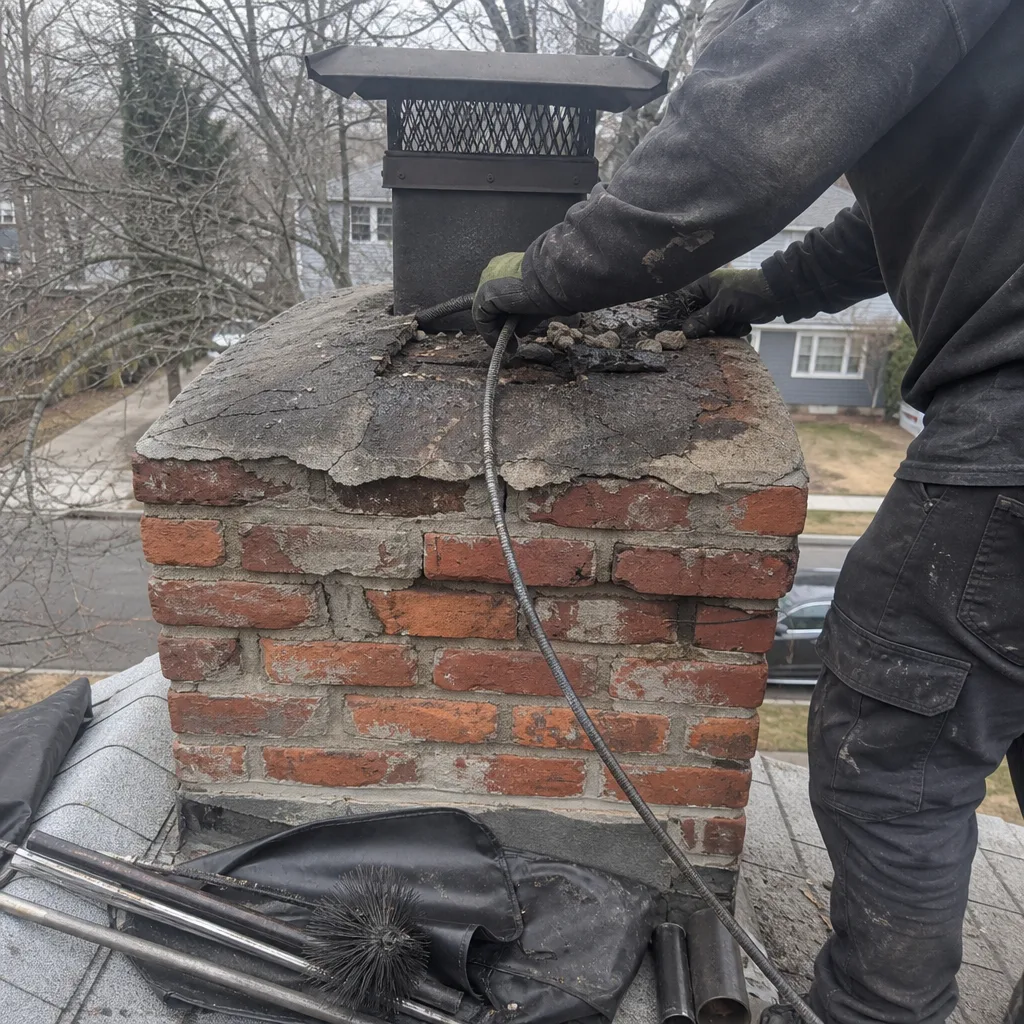 Before
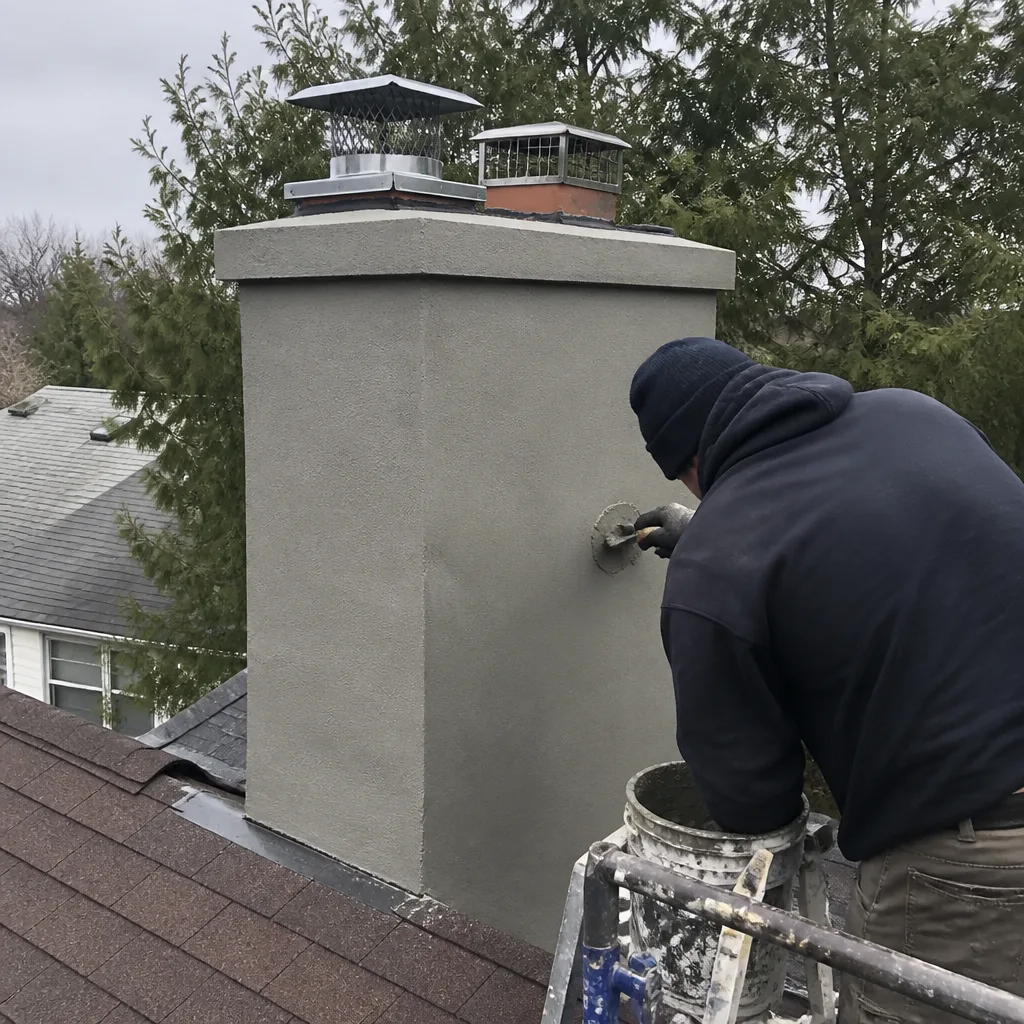 After
After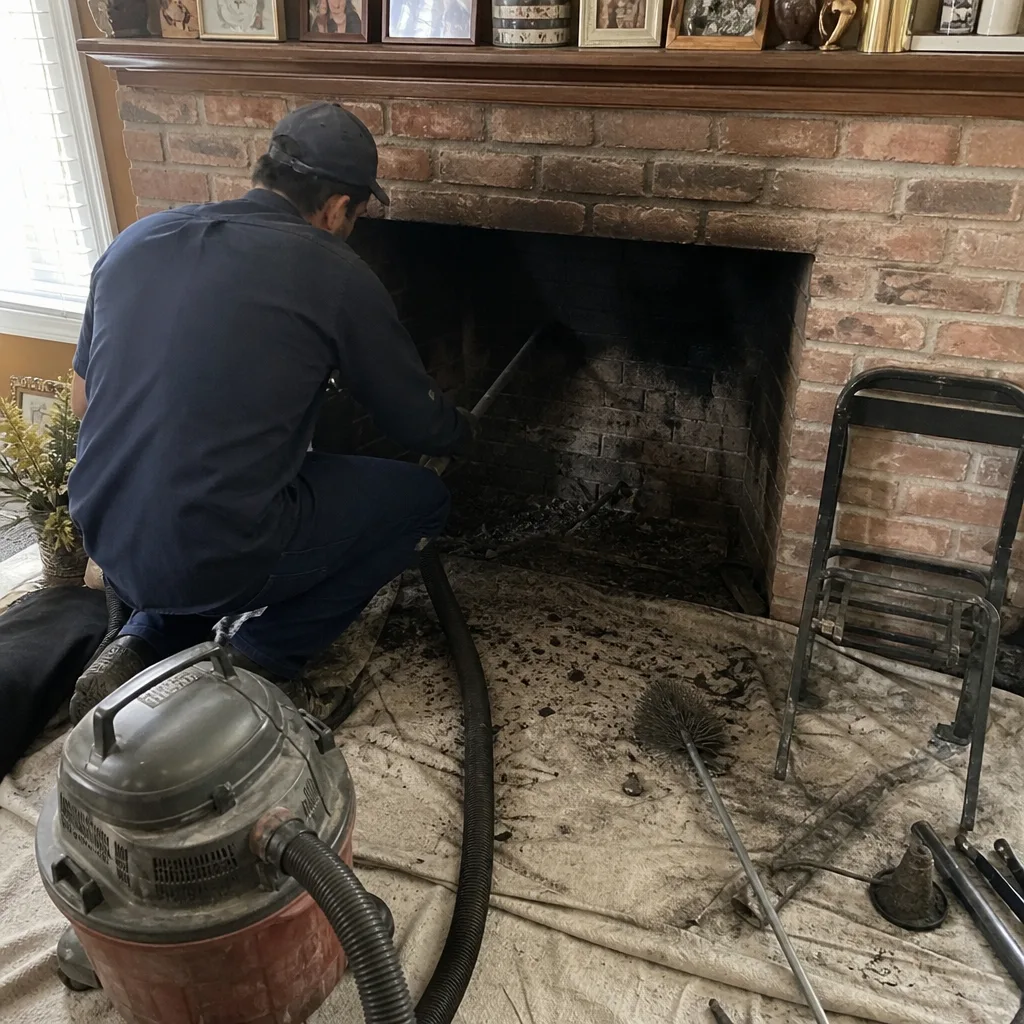 Before
 After
After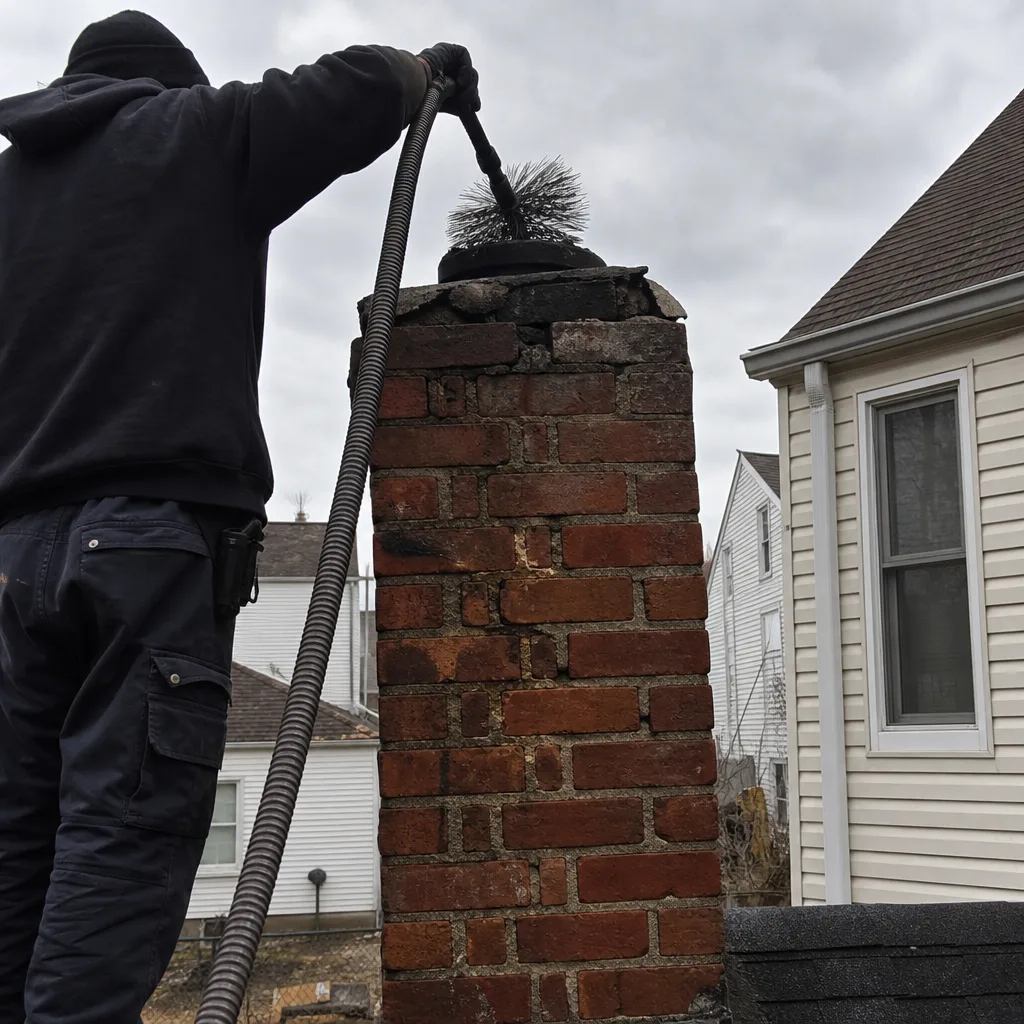 Before
 After
After