
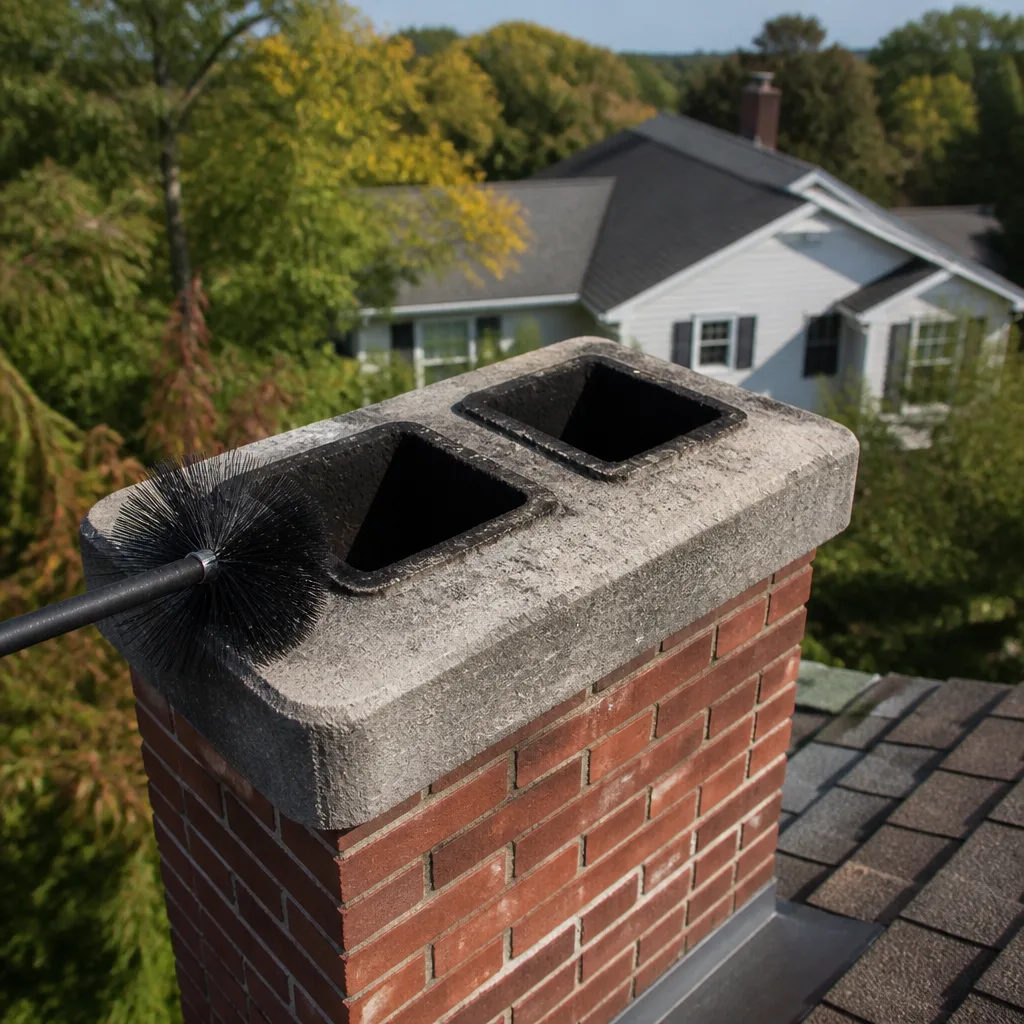
 Sweep & inspection
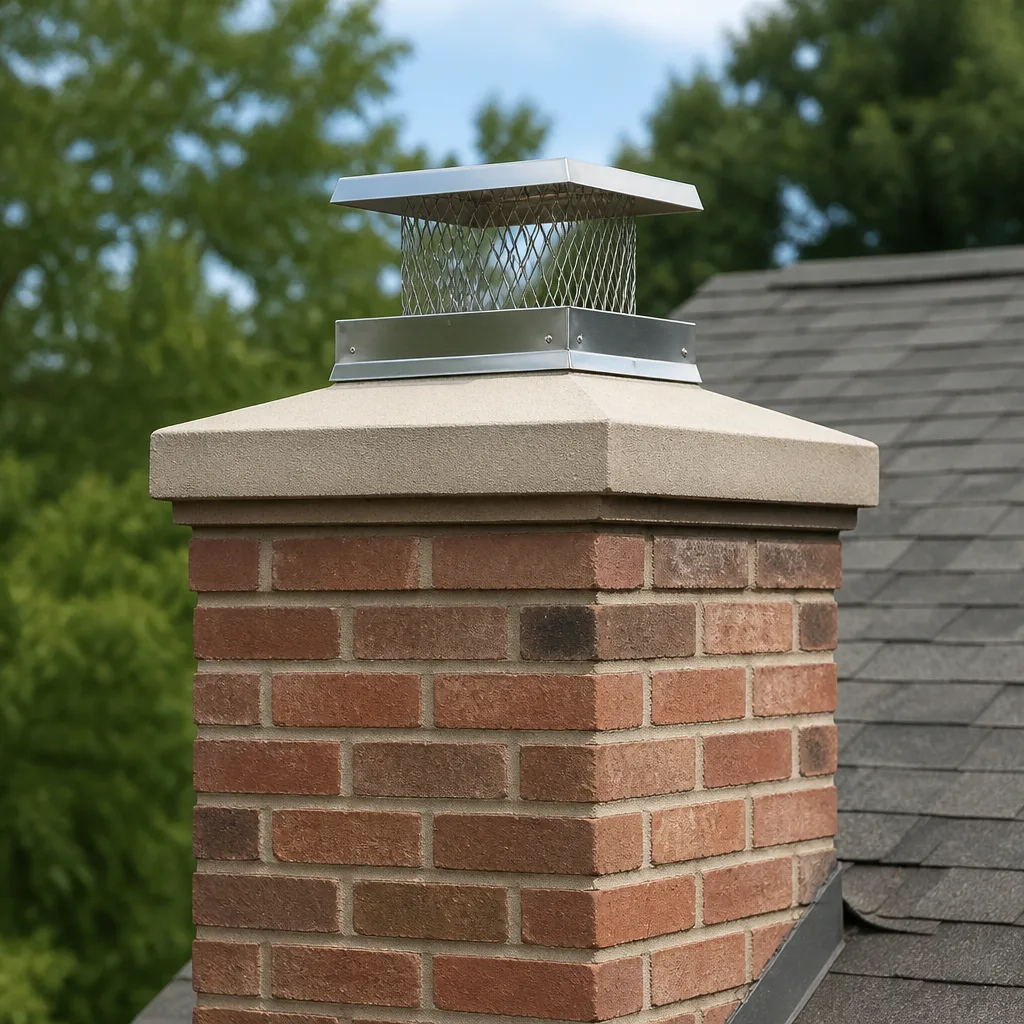 Caps & crowns
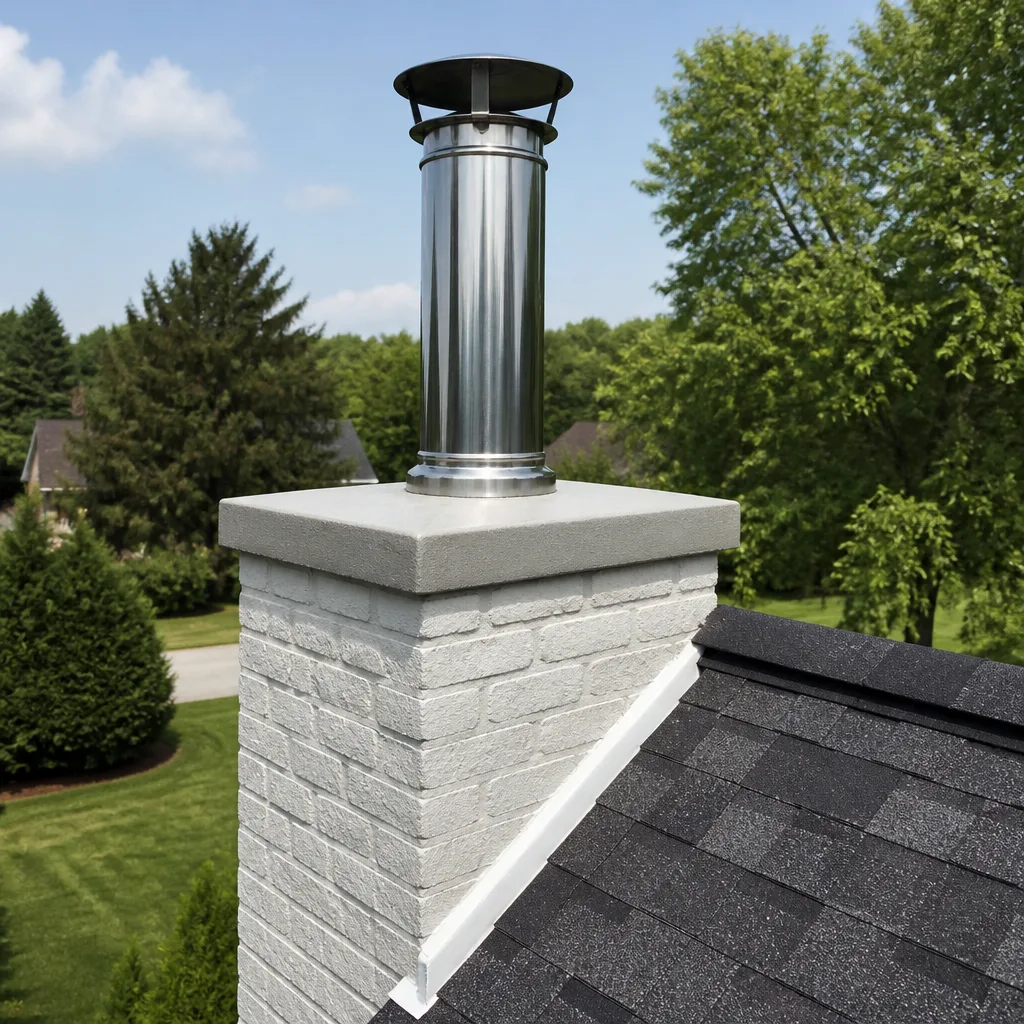 Flue relining
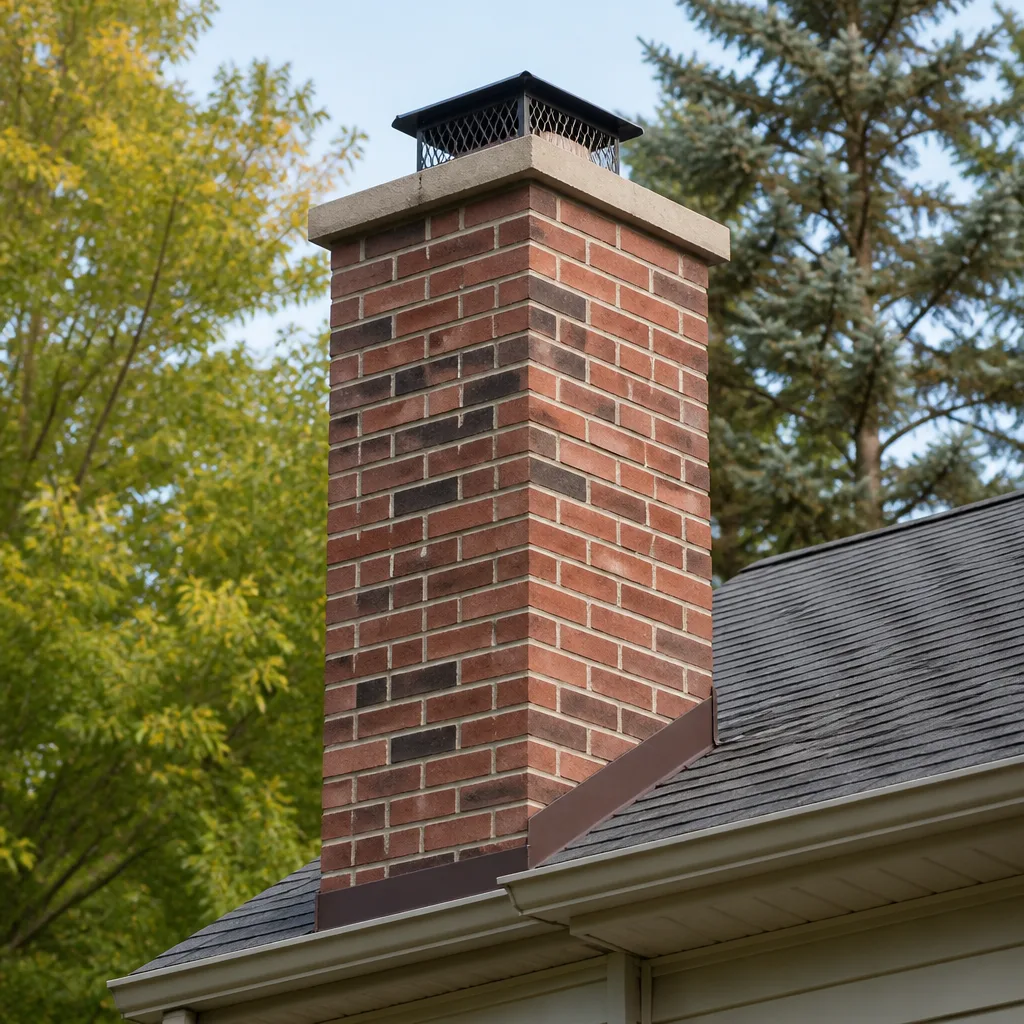 Masonry repair
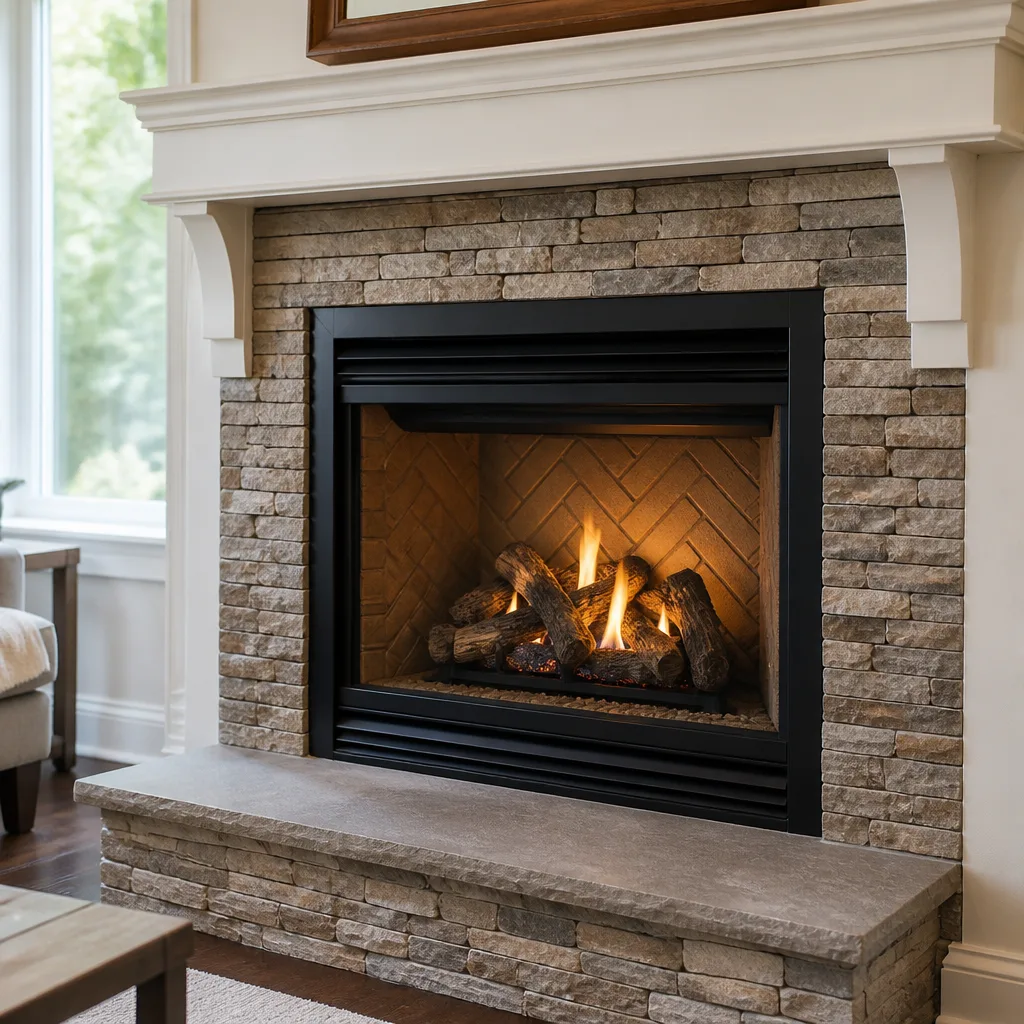 Gas fireplace service
Level 1 sweep and inspection to the NFPA 211 annual standard - flue, crown, cap, and flashing checked and photographed
Chimney sweep logs do not sweep chimneys. They loosen some creosote - which then falls where a brush and vacuum still have to collect it.
Styles & brands we work with
See the difference
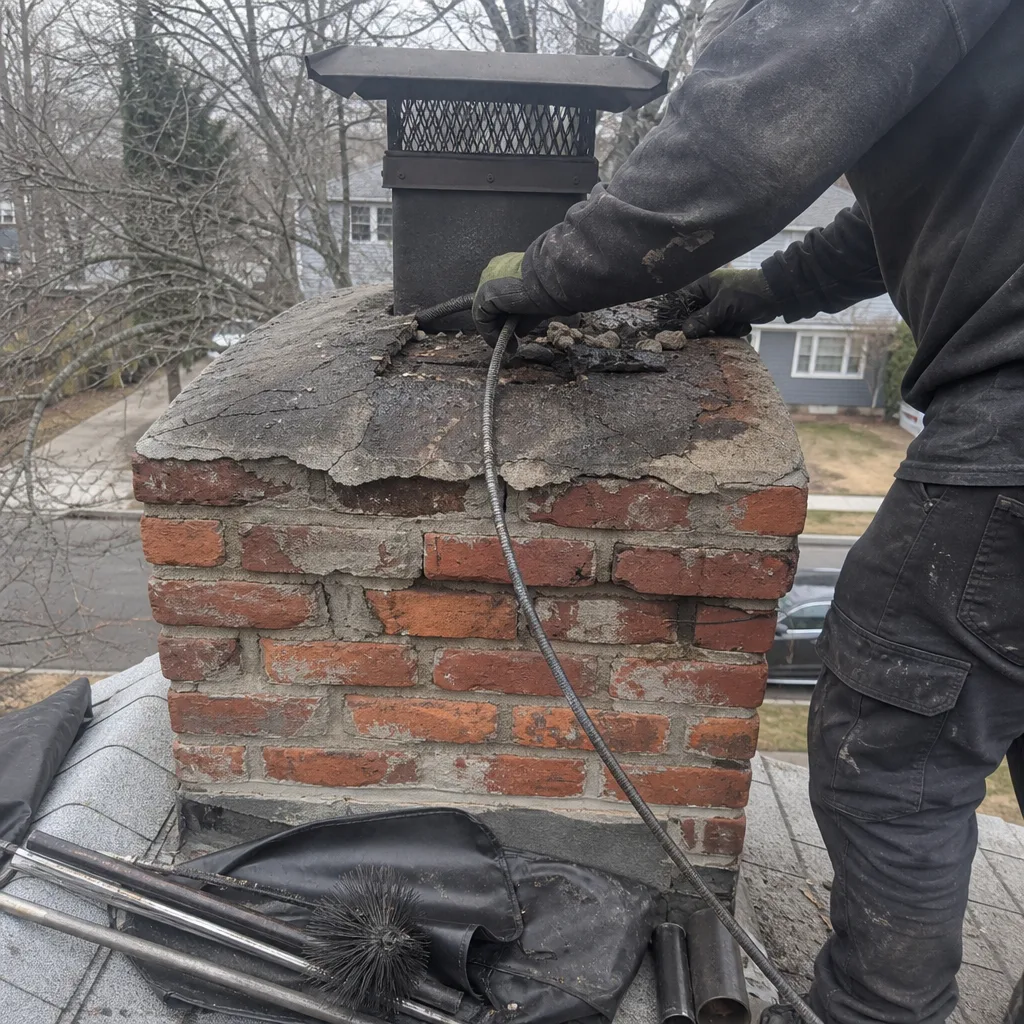 Before
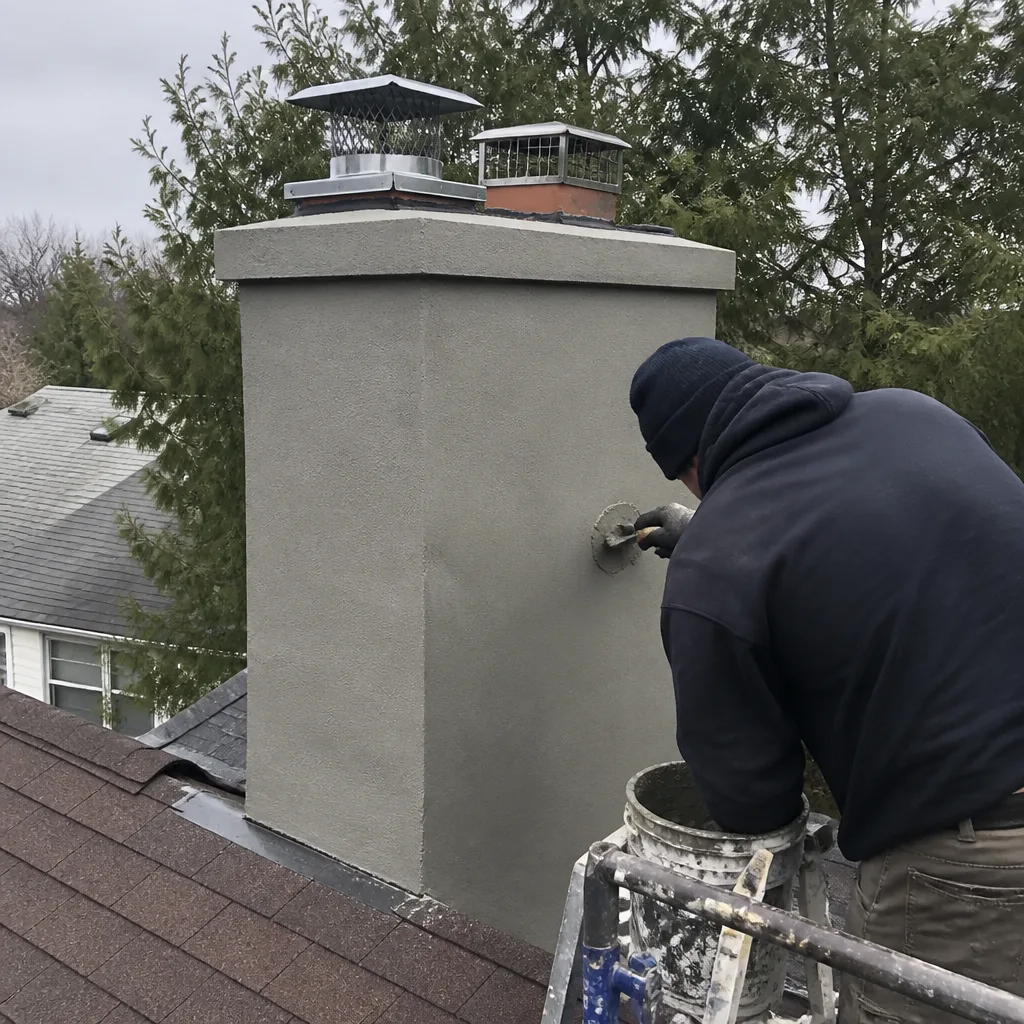 After
After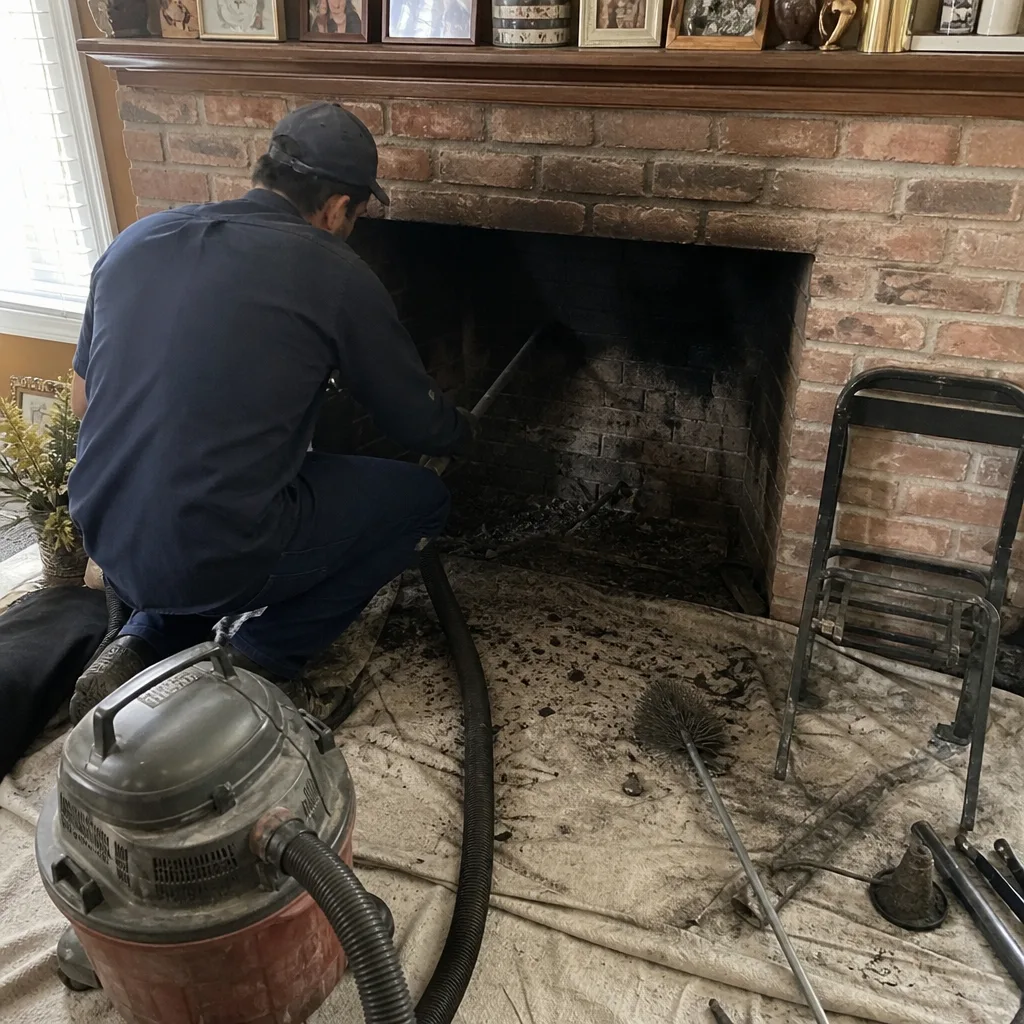 Before
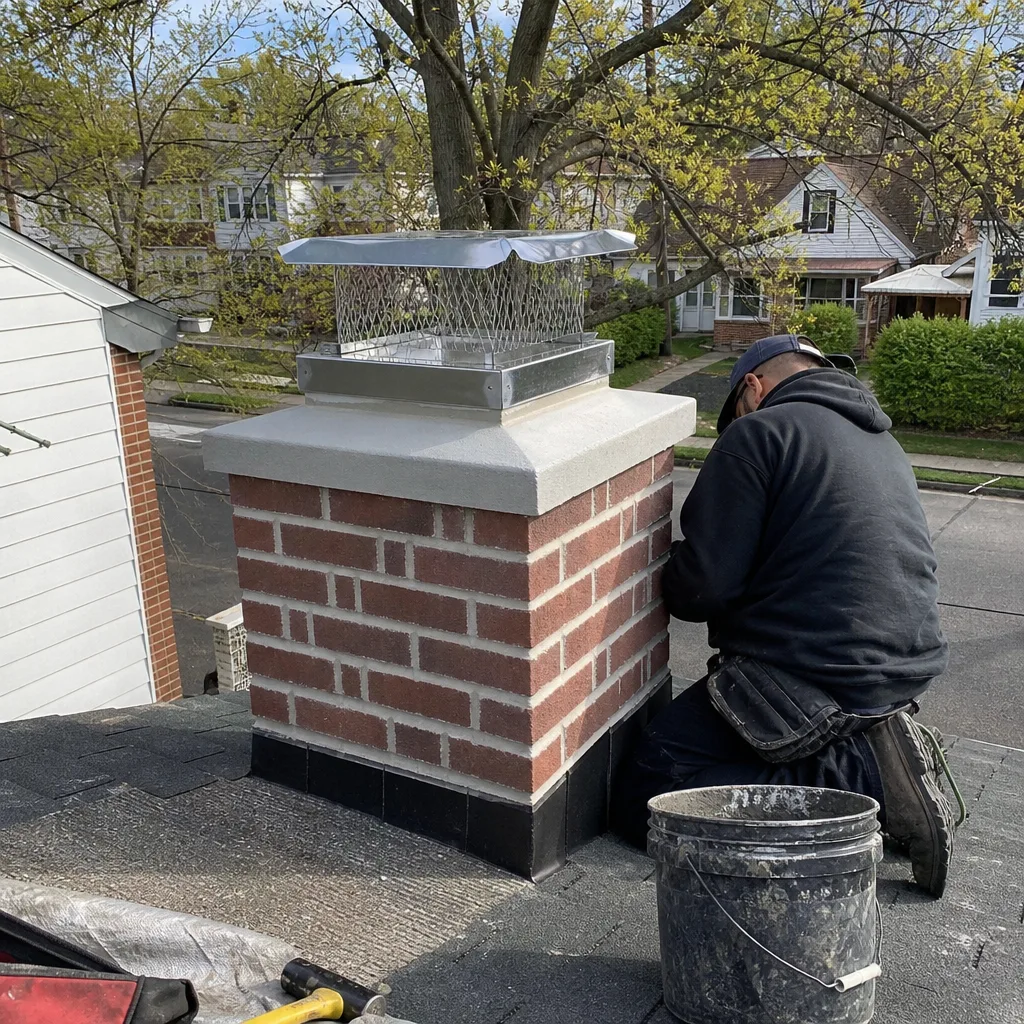 After
After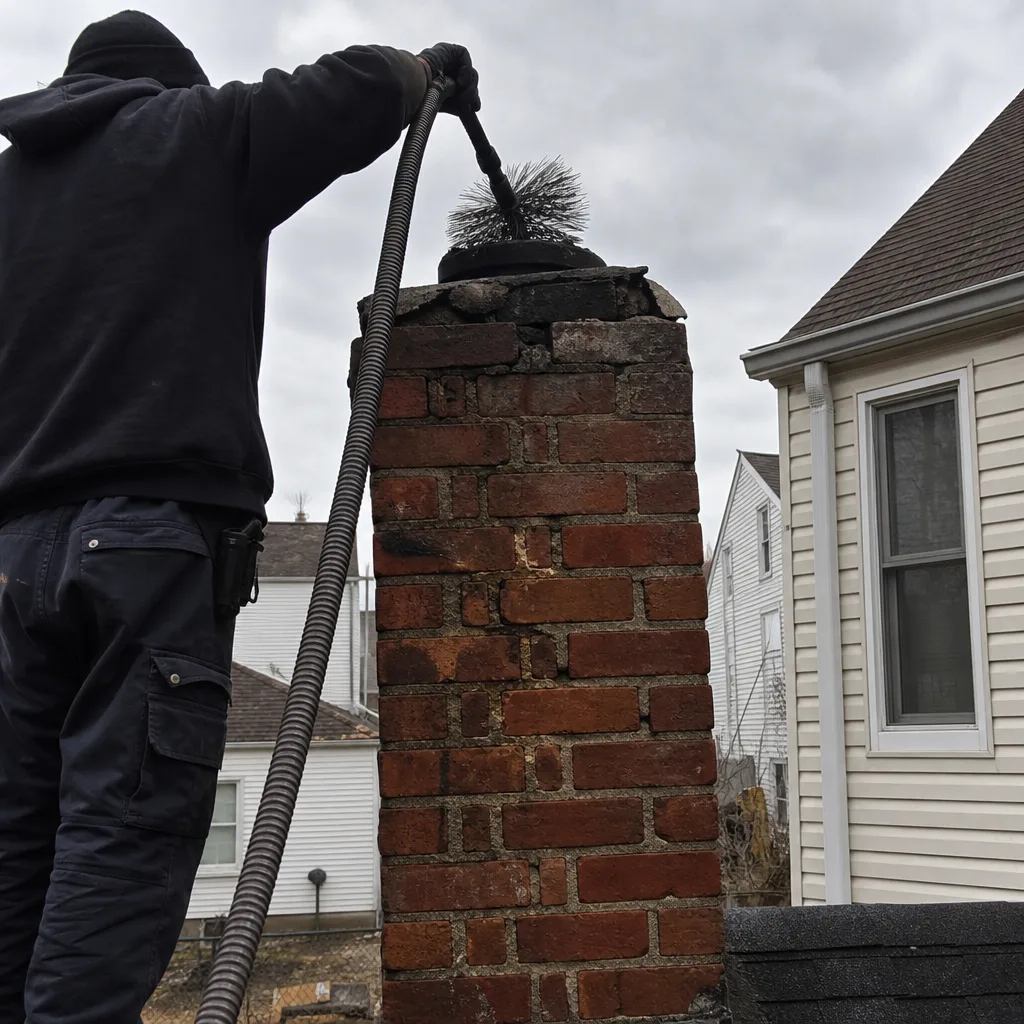 Before
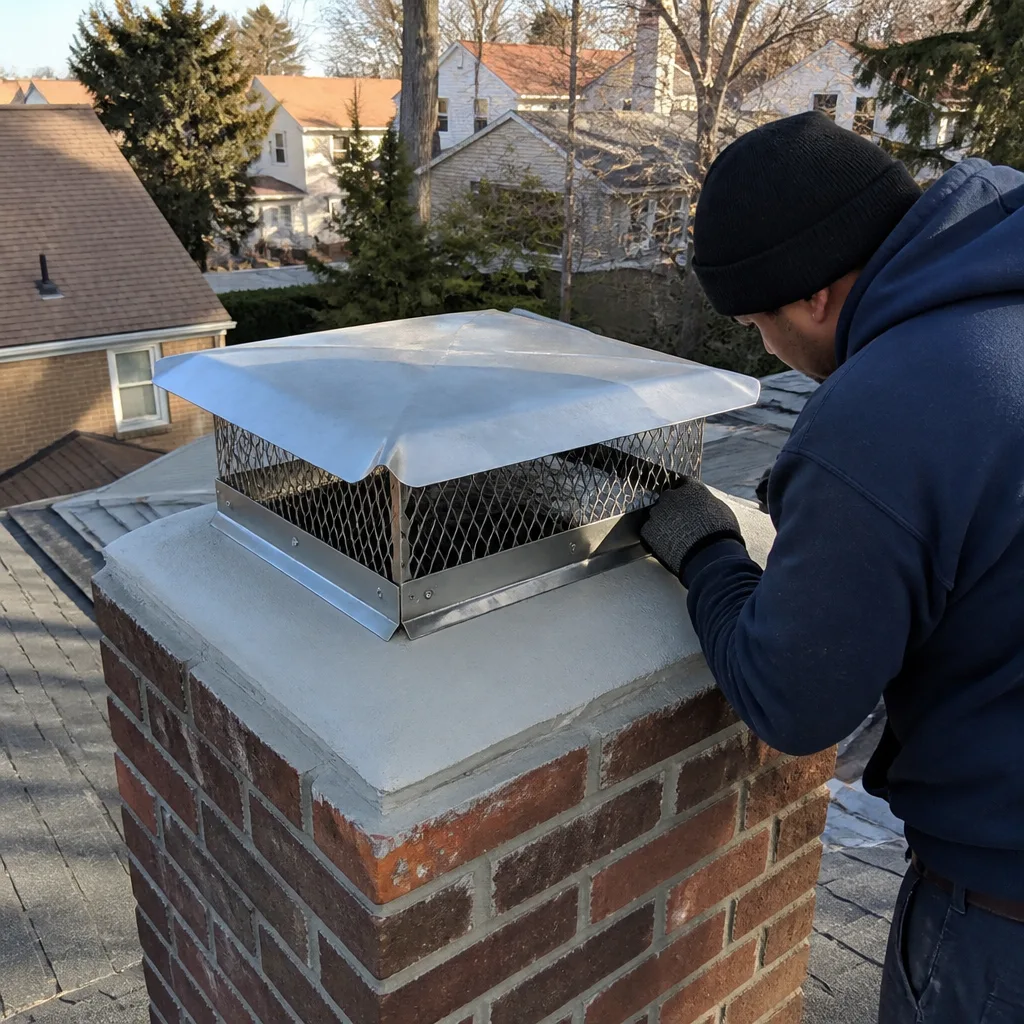 After
AfterSoot Removal in Queens, NY
Soot removal in Queens typically costs between $150 and $400 when done as a standalone service, though most homeowners bundle it with a full chimney sweep for the best value. If you’ve noticed black dust settling on your mantel, a smoky smell that lingers after fires, or flaky dark buildup inside your firebox, you’re dealing with creosote-heavy soot that needs professional attention. Alcott Chimney Queens has handled soot removal for Queens homeowners since 2002, and every job comes with a written price before work begins and a 365-day guarantee on the finished result.
Soot is the fine, powdery byproduct of incomplete combustion. When wood, gas, or pellets burn in your fireplace or heating system, tiny carbon particles rise with the smoke. Some of it vents outside. The rest condenses on the cooler surfaces of your flue, smoke chamber, and firebox walls. Over time, that thin layer of black dust becomes a thick, sticky, flammable coating. Left alone, it restricts airflow, corrodes masonry and metal components, and can eventually ignite. This page covers what soot removal involves, what it costs in Queens, and exactly how Alcott Chimney Queens does the job. If you’d rather just talk to someone now, call (518) 719-4643 – a live person answers around the clock.
For a deeper look at the full service we provide, see our Chimney Cleaning & Sweep in Queens page.
When You Need Soot Removal
Soot buildup doesn’t always announce itself. Sometimes the first sign is subtle, like a faint campfire smell in the living room a day after the fire has gone out. Here are the concrete signals that tell Queens homeowners it’s time to call us:
- Black dust on the mantel or hearth. If you can run a finger across your mantel and come away with a dark smudge, soot is no longer staying inside the chimney. That means airflow is restricted somewhere, and the fine particles are drifting back into your living space.
- A smoky smell that lingers for days. In neighborhoods like Forest Hills and Kew Gardens, where prewar homes have tighter flues than newer construction, residents often report a persistent smokiness even when no fire has been lit in weeks. That odor usually means soot has absorbed into the masonry pores or smoke chamber walls.
- Visible black flakes inside the firebox. Soot that has hardened into a flaky, tar-like layer is a sign that creosote has mixed in. This is the stage where chimney efficiency drops noticeably and where a professional inspection is genuinely urgent.
- Your damper feels sticky or hard to move. Soot and creosote coat the damper plate and its hinges. When the buildup gets thick enough, the damper won’t fully open or close, which causes smoke backup on lighting and heat loss when idle.
- White or gray dust instead of black. Gas fireplaces in neighborhoods like Bayside and Whitestone produce a different kind of soot, often whitish or gray, from the combustion of natural gas. It’s just as corrosive to firebox liners and venting systems, and it should be removed by trained hands every year.
- You can’t remember the last sweep. If it’s been more than 18 months since a professional touched your chimney, soot removal is overdue. Queens has a dense stock of masonry chimneys in attached homes from Astoria to Flushing, and shared party walls mean neglected flues in one unit can affect air quality in the next.
Any of these signs means the flue is carrying more than it should be carrying. The fix is the same: a thorough removal of the soot layer, followed by a check of the underlying chimney structure. Alcott sends every technician with their name and photo texted to you before arrival, so you always know exactly who’s coming to your door in any Queens neighborhood.
Our Soot Removal Process
We don’t do quick wipes or surface-only cleaning. Soot removal at Alcott Chimney Queens follows a set process that Ruben Castellano has refined over two decades of service in Queens homes.
- Protection and prep. We lay drop cloths around the hearth and firebox opening, and we run a HEPA-filtered vacuum to create negative pressure in the work area. This keeps airborne soot from migrating into your living room, which is a common complaint with less careful companies, especially in open-plan apartments in Long Island City and Sunnyside.
- Dry mechanical brushing. We run a professional chimney brush sized to your flue from the top of the chimney down to the firebox. This loosens the crust of soot and light creosote from the flue walls. For gas fireplaces, technicians use gentler nylon or poly brushes to avoid damaging the liner.
- Smoke chamber and damper cleaning. The smoke chamber above the firebox is the most overlooked soot trap in any chimney. Our technicians scrub it by hand through the firebox opening, ensuring the corbeled brick or stone loses its entire sticky layer. The damper and its housing get the same attention, which is why our customers report smoother damper operation after every visit.
- HEPA vacuum removal. Loose soot is pulled out with a high-powered HEPA vacuum, not swept under the rug or pushed through the ash dump. What leaves the chimney enters a sealed filter, not your home’s air.
- Inspection of surfaces underneath. Once the soot is gone, we look at what it was hiding: cracks in flue tiles, deteriorated mortar joints, damaged liners, or rusted damper assemblies. If we find a problem that needs repair, you’ll get a written quote with specific numbers before any additional work starts. No surprises at the end of the day, ever.
- Final report and guarantee. Ruben or the technician walks you through what was found, what was cleaned, and what, if anything, should be watched. Every repair that comes out of a soot removal job comes with a written guarantee and the 365-day Done Right Promise: if the work isn’t right within a year, we come back and make it right at no charge.
Why Professional Soot Removal Matters in Queens
Queens is not a uniform housing market. The borough mixes 1920s brick row houses in Ridgewood, postwar garden apartments in Rego Park, and modern high-rise condos with shared venting in Hunters Point. Each structure has its own chimney profile, and soot behaves differently in each.
In older masonry homes with unlined flues, soot soaks into mortar and brick. The chimney becomes a sponge, and the smoky smell never fully leaves, even after sweeping. In those cases, soot removal often reveals the need for a Chimney Cleaning & Sweep plus possible liner installation or resurfacing. Alcott installs and services professional trade brands like HeatShield and Olympia Chimney, both recognized names among chimney professionals. HeatShield is a ceramic resurfacing system used to seal and restore flue walls after corrosion or spalling. Olympia Chimney supplies stainless steel liners and chimney caps. These are not box-store substitutes; they’re what the trade specifies.
In attached Queens homes, party-wall construction means two chimneys often share a central masonry core. If soot is left to pile up in one flue, the adjacent unit’s flue can be impacted by heat transfer and, in the worst case, by smoke migration through failed mortar joints. Homeowners in neighborhoods like Woodside, Jackson Heights, and Elmhurst, where attached brick homes are the standard, should treat soot removal as a yearly habit rather than an occasional chore.
Queens also has a high number of households with young children and older adults who spend more time at home than average. For those residents, the air-quality argument matters as much as the fire-safety argument. Fine soot particles that escape from a neglected chimney carry polycyclic aromatic hydrocarbons, which are best kept out of living space altogether. A sealed fireplace system and a clean flue are meaningfully better for anyone with asthma, allergies, or other respiratory conditions.
Soot Removal Pricing in Queens
Most Queens homeowners pay between $150 and $400 for soot removal as a standalone service. Here’s how the numbers typically break down:
- Basic soot removal (small gas fireplace): $150 – $250. A single firebox and vent, no major buildup, usually completed in under an hour.
- Standard masonry fireplace soot removal: $200 – $350. Typical of the fireplaces in Jamaica Estates, Bellerose, and Auburndale, where wood burning is common and flues run taller.
- Heavy soot and creosote removal with smoke chamber cleaning: $300 – $450. For chimneys that haven’t been cleaned in years, or where the smoke chamber needs hand-scrubbing rather than a quick pass.
- Full chimney sweep and soot removal bundle: $250 – $500, depending on flue height, liner condition, and accessibility from the roof. In most Queens homes, bundling is the smartest option because it addresses the entire system in one visit.
A few factors move the price in one direction or the other. Flue height matters: a three-story rowhouse in Astoria costs more to sweep than a one-story ranch in Howard Beach because there’s more surface area and more ladder work. Roof slope and access matter too: a steep pitch or a crowded roofline in neighborhoods like Glendale or Middle Village adds time. And the type of appliance matters: gas fireplace soot removal usually costs less than wood-burning systems because the soot layer is thinner and less sticky, at least when the unit has been serviced regularly.
Alcott Chimney Queens gives every customer a written price before any work starts. That’s not a preference; it’s how Ruben Castellano has run the business since day one in 2002. You’ll see the number in writing, you’ll know what it covers, and the final invoice won’t come with mystery line items. Estimates are free, and the phone is answered by a live person at (518) 719-4643 around the clock.
Soot Removal and Chimney Safety in Queens: What to Know
A sooty chimney is not just a housekeeping issue. It’s a fire risk. Creosote, the tar-like substance that forms when soot and moisture combine, ignites at around 451 degrees Fahrenheit. A chimney fire doesn’t announce itself with flames shooting out the top like a movie scene, either. It can burn slowly and quietly inside the flue, at temperatures high enough to crack flue tiles, melt mortar, and transfer heat to the framing of your home. Queens homeowners with attached houses should know that a chimney fire in a row house doesn’t stay contained to one unit if the fire block and party wall have been compromised by years of heat cycles.
That’s why Alcott recommends annual soot removal and chimney inspection for any Queens home that burns wood more than a dozen times per season. For gas fireplace owners, every other year is usually adequate, but the first visit after buying a home should always include a full inspection. If you just moved into an attached brick home in Kew Gardens Hills or a detached colonial in Douglaston, you don’t know how the previous owner maintained the flue. Spending $300 now beats discovering a cracked flue liner in January, when emergency calls cost more and every chimney company in the borough is booked out for weeks.
When our technicians find damaged liner surfaces during soot removal, we use products like Gelco and HeatShield ceramic systems to repair them. Gelco makes professional-grade chimney maintenance products, including creosote removers and masonry sealers, that chimney professionals have specified for decades. HeatShield is applied as a resurfacing system that essentially builds a new liner inside the old one, without the full tear-out cost of a stainless steel relining. Ruben’s team will walk you through the options and give you honest numbers for each, along with a recommendation based on what we actually saw inside your flue, not a generic upsell script.
Why Queens Homeowners Choose Alcott Chimney Queens
Ruben Castellano started serving Queens homeowners in 2002 as part of the Threshold Group family of home-service companies. The Threshold Standard isn’t a slogan; it’s a set of operating rules every technician follows. Before any tech steps onto a customer’s property, they pass a background check and identity verification. Every customer receives the technician’s name and photo before arrival. Every technician wears a uniform and carries a photo ID badge that they show at the door. Every time.
That last part matters in Queens, where door-to-door impersonation and home-security concerns are real. Parents at home with small children in Forest Hills, older homeowners in Whitestone, and solo apartment dwellers in Astoria all tell our office the same thing: they want to know exactly who is coming before they open the door. Alcott built its entire process around that concern. You’ll have a name and a face to expect. When the doorbell rings, you check the ID badge against the photo we sent. It matches, every time, because the system is built that way.
The 365-day Done Right Promise backs every completed job. If the soot removal isn’t right, or a repair we made fails within a year, the second visit is free. That guarantee is written, not verbal, and it’s included on every repair at no extra charge. The work itself uses professional trade materials: DuraFlex liners, HeatShield resurfacing, Olympia Chimney caps and components, Famco ventilation products, and Gelco maintenance products. No box-store substitutes, no improvised solutions.
Neighborhoods We Cover
Alcott Chimney Queens removes soot from every residential chimney type across the borough, including Flushing, Jamaica, Astoria, Long Island City, Forest Hills, Kew Gardens, Bayside, Whitestone, Woodside, Jackson Heights, Elmhurst, Rego Park, Middle Village, Glendale, Ridgewood, Howard Beach, and the Rockaways.
Whether you’re in a prewar six-story co-op in Forest Hills with a central chimney, a converted factory loft in Long Island City with a decorative venting issue, or a single-family detached home in Bellerose with a traditional masonry fireplace, the process is the same: a live person takes your call, an identity-verified technician shows up with the equipment, and you get a written price before the first brush touches the flue.
FAQs – Soot Removal
How much does soot removal cost in Queens?
Soot removal in Queens typically costs $150 to $400 depending on fireplace type, flue height, and the amount of buildup. Gas fireplaces trend toward the lower end of that range, while heavily built-up wood-burning masonry chimneys trend toward the higher end. Every Alcott quote is delivered in writing before work begins, so the number you see is the number you’ll pay. Call (518) 719-4643 for a free exact quote.
Can you remove soot from a gas fireplace?
Yes, soot removal for gas fireplaces is one of the most common jobs Alcott does in Queens, especially in condos and co-ops where wood burning is prohibited. Gas combustion produces a fine, grayish-white soot that clings to ceramic logs, glass fronts, and venting components, and if left alone it will corrode the firebox liner and reduce heating efficiency. Our technicians use gas-safe brushes and avoid aggressive wet cleaning methods that could damage ceramic logs or pilot assemblies.
Will soot removal fix the smoky smell in my house?
In most cases, yes. A lingering smoky smell usually means soot has built up inside the smoke chamber or absorbed into the masonry, and removing that buildup eliminates the odor. If the smell persists after cleaning, the issue may be a structural problem like a cracked flue liner or a failing damper, which our inspection will identify. Call (518) 719-4643 and we’ll diagnose it in one visit.
Is it cheaper to remove soot myself?
You can buy a chimney brush and a shop vacuum for under $100, but soot removal without proper equipment and training means inhaling fine particulates, spreading black dust through your home, and often missing the smoke chamber entirely. The crevices that hold the most flammable material are also the hardest to reach without professional tools and know-how. Alcott’s HEPA-filtered vacuum system contains the dust rather than blowing it through your living room, and the inspection that comes with every visit catches problems before they become repair bills.
Written by Ruben Castellano, Owner at Alcott Chimney Queens, serving Queens.